Found an injured animal? What to do and who to call
You've found an animal that needs help – and you're wondering who's responsible now. The answer depends on whether it's injured, whether it's a wild animal and whether it belongs to someone.
Image: AI-generated for Animal Helper Guide – for illustration.
- Injured or in danger? Protect yourself first, then call the emergency vet service or an animal rescue service. If the animal is trapped: fire brigade on 122.
- Deer, hares, foxes & co.: never take them with you – that's interfering with someone else's hunting rights. Call the police on 133 or the local hunter.
- Baby birds and fawns are usually not abandoned. Watch rather than take them.
- Dog or cat: have the microchip read by a vet or animal shelter, and report the find to the municipality.
- Animal cruelty: happening right now → police on 133; otherwise the official vet or the animal welfare ombudsperson – anonymously if you prefer.
If the animal is injured or in danger, protect yourself first, then call the emergency vet service or an animal rescue service (Tierrettung) – for a trapped animal, the fire brigade (122). Never take wild animals such as deer or hares with you; inform the police (133) or the local hunter instead. If you find a dog or cat, have it checked for a microchip and report the find to the municipality. The decision path in three questions:
Found an animal – what now?
You first, then the animal: helping safely
An injured, frightened animal may bite or scratch – even if it's usually gentle. And many animals are found by the roadside.
- Keep yourself safe: hi-vis vest, warning triangle, distance from the traffic.
- Approach slowly and from the side, speak calmly, and don't stare the animal in the eye.
- Wear gloves, or use a blanket or jacket to pick up a small animal. Hold wild animals around the body.
- Transport: in a closed carrier or a cardboard box with air holes. Larger dogs on a blanket – with two people if possible.
- Don't give it anything to eat, and no milk, before a vet has seen it.
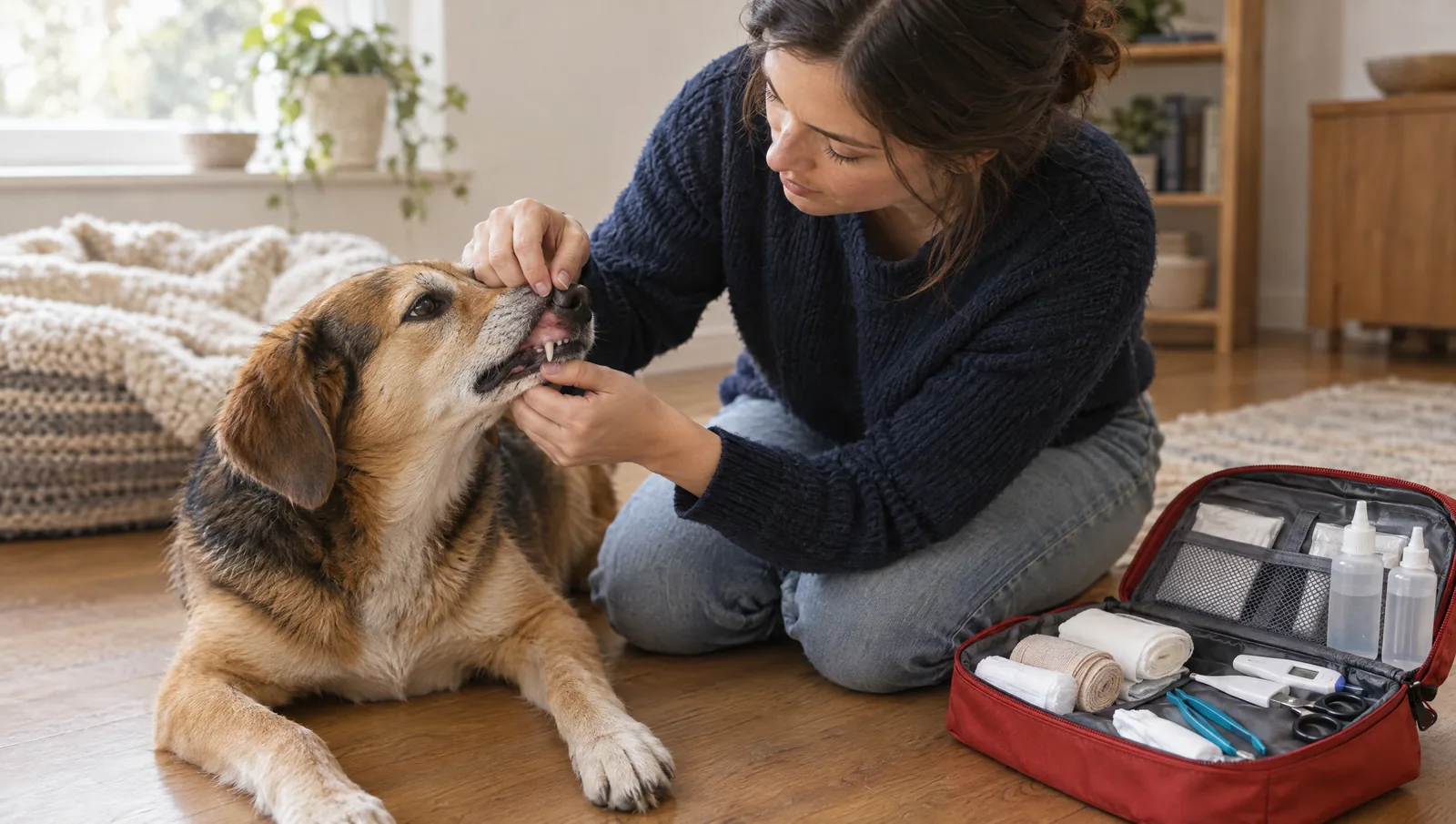
How to stop bleeding and transport an injured animal is explained in detail in our guide Pet first aid for dogs and cats.
Who do I call?
| Situation | First | Then |
|---|---|---|
| Animal trapped, in a shaft or a pipe, in acute danger | Fire brigade 122 | Animal rescue service in your federal state |
| Injured pet | Emergency vet service or animal hospital | Municipality, have the chip checked |
| Collision with wildlife | Police 133 or local hunter | – |
| Injured wild animal, young animal, bird | Call first: wildlife rescue centre in your federal state | – |
| Animal has turned up or been found | Municipality (lost-and-found authority) | Found-animal portal of your state |
| Animal cruelty happening right now | Police 133 | Official vet, animal welfare ombudsperson |
| Dog in a hot car | Police 133 | – |
The numbers of animal rescue services, emergency vets and wildlife rescue centres for every federal state are in the emergency directory.
Found a dog or cat
- Have the microchip read – at the nearest vet, animal shelter or animal welfare group. It's quick and usually free.
- Report the find to the municipality (Gemeinde). It is responsible in the first instance. If the owner can't be found, the district administrative authority (Bezirksverwaltungsbehörde) arranges somewhere for the animal to stay, together with the official vet (Amtstierarzt).
- Check the found-animal portals – several states have their own, such as the Tierschutzportal Oberösterreich, the Tiersuche Niederösterreich or the Fundtierdatenbank Salzburg.
Which database is the right one?
In Austria, dogs must be microchipped and registered in the official pet database (Heimtierdatenbank) – that's heimtierdatenbank.ehealth.gv.at. The similar-sounding heimtierdatenbank.at is a private register. Cats are often also registered with private providers such as Animal Data or PETCARD. So when the chip is read, ask for all registers to be checked.
Stray cats
In Austria, cats that regularly go outdoors must be neutered unless they're used for breeding. Stray cats are therefore a job for animal welfare groups, who trap them, get them veterinary care and have them neutered. That's also the most effective help for street animals in our partner countries.
Wild animals: helping without doing harm
Deer, hares, foxes, wild boar, pheasants, ducks
These animals are game and belong to the holder of the local hunting rights. Anyone who takes them – even dead from the road – is committing interference with another person's hunting rights (§ 137 of the Austrian Criminal Code, StGB). Inform the police (133) or the local hunter. Which species count as game varies from one federal state to another.
Other wild animals – hedgehogs, songbirds, squirrels, bats – need help if they are visibly injured, can't get away, are in a dangerous place or, as nocturnal animals, are wandering about during the day. Either way, call a wildlife rescue centre first before you take an animal with you.
Found a baby bird
Most are fledglings: feathered, with a short tail. They leave the nest before they can fly – and are fed by their parents for about another two weeks. Watch from a distance for one to two hours. Only if no adult bird comes, or the bird is in danger, place it up high in a bush nearby and call a rescue centre.
Found a fawn
Don't touch it, don't take it. The doe leaves her fawn alone on purpose and comes back to feed it. If the fawn smells of humans, she may reject it. If it's injured: inform the hunter.
Hedgehogs in autumn
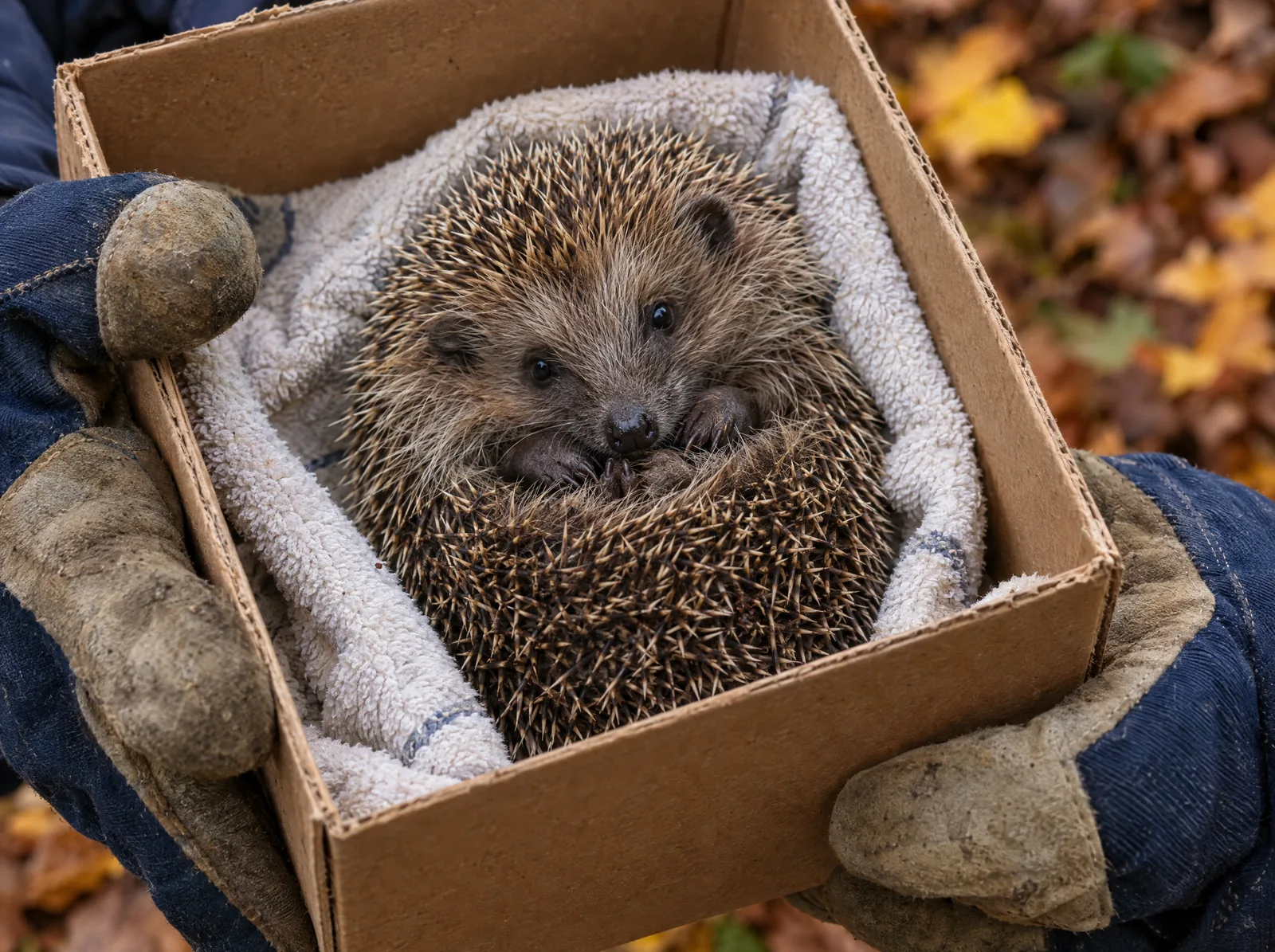
Healthy young hedgehogs usually don't need help in autumn. Wildtierhilfe Wien gives a weight of around 600 grams for November; Swiss hedgehog centres put 500 grams as the minimum, with 600–700 g being better. More important than the weight is the overall impression: a hedgehog that is out during the day, staggering, has fly maggots or is making breathing noises needs to go to a hedgehog rescue or a vet straight away. Don't feed: fruit, vegetables, grain, dairy products.
Reporting animal cruelty: how it works in Austria
If it's happening right now or an animal is in acute danger, call the police (133). For neglect or poor living conditions, the official vet (Amtstierarzt) is responsible – at the district authority (Bezirkshauptmannschaft), or in cities with their own charter at the municipal authority (Magistrat). The animal welfare ombudspersons (Tierschutzombudsstellen) of the federal states also take tip-offs, anonymously if you wish.
Make your report count
- Note down the place, date and time
- Photos or videos – only if you won't put yourself in danger
- What exactly did you see? How many animals? For how long?
- Witnesses and their contact details
| Federal state | Animal welfare ombudsperson | Phone |
|---|---|---|
| Burgenland | Amelie Göschl | 057 600 2960 |
| Carinthia (Kärnten) | Dr.in Jutta Wagner | 050 536 37000 |
| Lower Austria (Niederösterreich) | Dr.in Lucia Giefing | 02742 9005 15578 |
| Upper Austria (Oberösterreich) | Dr.in Cornelia Rouha-Mülleder | 0732 7720 14281 |
| Salzburg | Mag. Alexander Geyrhofer | 0662 8042 3461 |
| Styria (Steiermark) | Dr.in Karoline Schlögl | 0316 877 3966 |
| Tyrol (Tirol) | Dr. Martin Janovsky | 0512 508 3247 |
| Vorarlberg | Dr.in Ruth Sonnwender | 05574 511 42099 |
| Vienna (Wien) | DI.in Eva Persy | 01 318 00 76 75079 |
Source: the Ministry of Health's consumer health platform (Kommunikationsplattform VerbraucherInnengesundheit) and the states' websites, accessed on 27.09.2026.
Seen an animal in need abroad?
On holiday in Romania, Bulgaria, Hungary or Türkiye and seen an animal that needs help? Send us the location, photos and a short description on WhatsApp. We'll check whether one of our local partners can help.
Frequently asked questions
Can I keep a cat I've found?
Not just like that. A found animal still belongs to its owner at first. Report the find to the municipality (Gemeinde), have the microchip read and check the found-animal portals of your federal state. If no one comes forward, the authority decides what happens next – ask them whether you can take the animal in.
Is heimtierdatenbank.at the official database?
No. The official pet database of the Austrian Ministry of Health is at heimtierdatenbank.ehealth.gv.at (log-in with ID Austria). heimtierdatenbank.at is a private register. When reading the chip, the practice should ideally check all databases.
I've hit a deer. What do I have to do?
Secure the scene of the accident and inform the police (133) or the local hunter – even if the animal has run off. Don't take the animal with you: game belongs to the holder of the local hunting rights.
I've found a hedgehog. Does it need help?
If it's out and about during the day, staggering, injured, has fly maggots or is making breathing noises: yes, take it to a hedgehog rescue or a vet straight away. Healthy young hedgehogs in autumn usually don't need help; according to Wildtierhilfe Wien, they should weigh around 600 g in November. Don't give milk.
Can I report animal cruelty anonymously?
Yes, you can also send tip-offs to the animal welfare ombudspersons of the federal states anonymously. The more precise your details (place, date, time, photos), the more likely it is that the authority can act.
Can I feed stray cats?
Feeding alone doesn't solve the problem. In Austria, cats that regularly go outdoors must be neutered unless they're used for breeding. Many animal welfare groups trap stray cats, have them neutered and release them again. Ask a group near you – or ask us.
Sources
- Wiener Tierschutzverein – Found a wild animal: what to do? (in German)
- Wiener Tierschutzverein – Found a pet: what to do? (in German)
- § 137 Austrian Criminal Code (StGB) – Interference with another's hunting or fishing rights (RIS, in German)
- State of Burgenland – Found animals in Burgenland (in German)
- oesterreich.gv.at – Marking and registration of dogs (in German)
- Official pet database (Heimtierdatenbank), Ministry of Health
- State of Lower Austria – Keeping cats (in German)
- Consumer health platform (VerbraucherInnengesundheit) – Animal welfare ombudspersons (in German)
- State of Upper Austria – Animal welfare ombudsperson (in German)
- Wildtierhilfe Wien – Found a baby bird (in German)
- Wildtierhilfe Wien – Hedgehogs' hibernation weight (in German)
- Igelzentrum Zürich – Assessing a hedgehog in autumn (in German)
- BirdLife Austria – Found a bird (in German)
- ÖAMTC – Road accidents involving animals (in German)
- oesterreich.gv.at – Emergency numbers (in German)